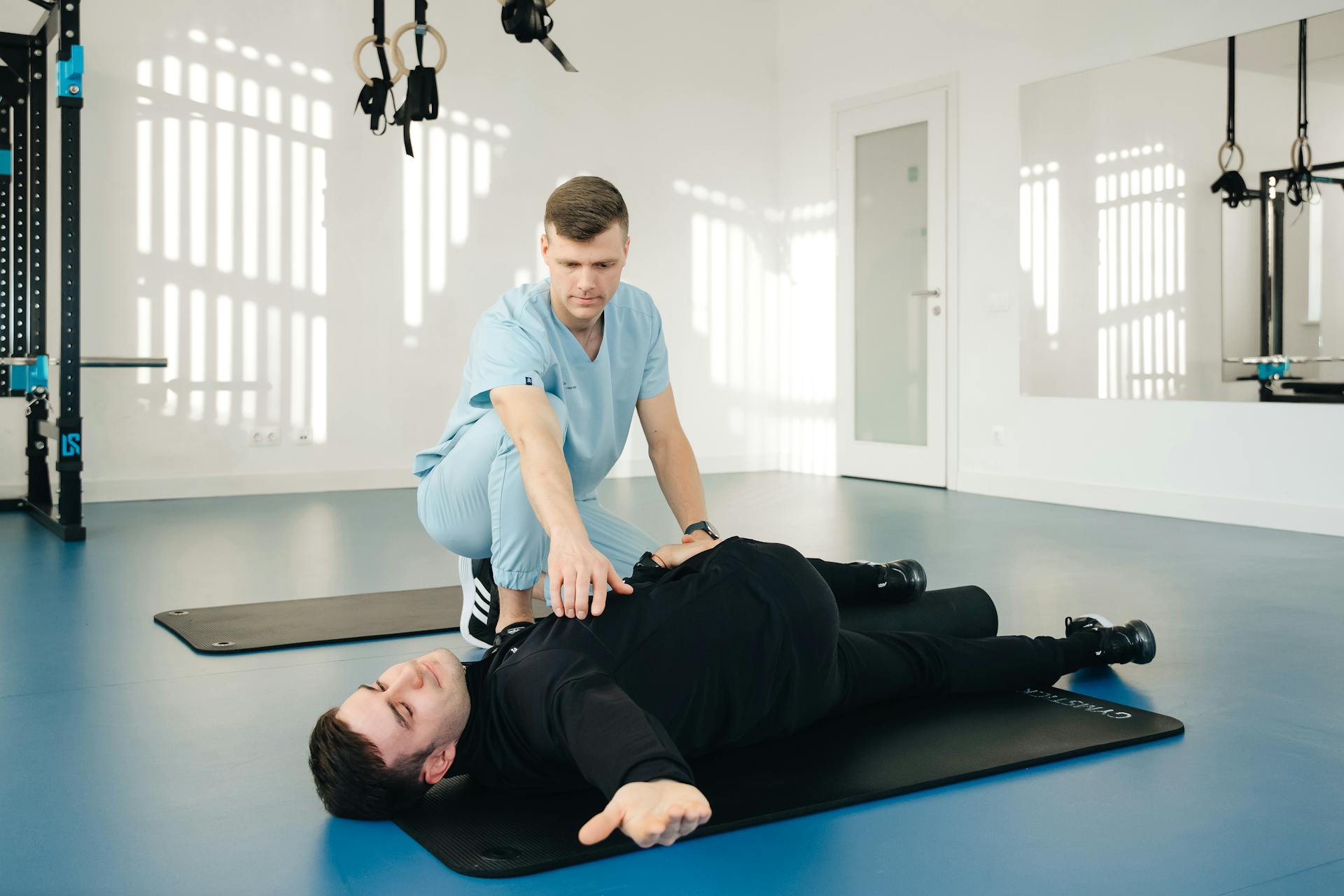
If you’re an athlete and you’re seeing a physio who treats your body like it’s a slightly broken office worker, you’re in the wrong room.
Athletes do not fail because they “have pain.” They fail because their capacity no longer matches their load. Pain is often the last message, not the first. A physiotherapist for athletes has to think like a coach who understands tissues, not like a symptom technician.
Here’s a familiar scene. A runner arrives saying, “My Achilles is tight.” They can still run, but the tightness now shows up at kilometre three instead of kilometre ten. If you only treat the Achilles, you might win the week and lose the season. The real question is why the tendon is being asked to absorb more load than it can currently tolerate.
That is sports physiotherapy.
What Makes a Physiotherapist for Athletes Different?
General physiotherapy is excellent at restoring day-to-day function: walking, working, sleeping, basic movement without pain. Sports physiotherapy is different because the “job description” is different.
An athlete’s body must tolerate repeated high-load tasks under fatigue. Sprinting in the last quarter. Heavy pulls after a poor night’s sleep. A long run on tired calves. Those are not edge cases. That’s the point of training.
So the assessment has to match the task.
If a footballer reports hamstring tightness, I want to know the exact moment it appeared. Was it during acceleration? At top speed? During deceleration? After a change of direction? The mechanism matters because the rehab plan changes with it. A hamstring that complains at top speed is not managed the same way as one that twinges on a slow hinge.
It’s also important to consider the training context. Did they increase sprint exposure recently? Was there a game backlog? Are they doing extra conditioning? When a problem starts, there is usually a story behind it.
A physio who treats athletes should be comfortable saying, “This is not random. Let’s find the pattern.”
And yes, pain relief matters. But chasing pain relief alone is how athletes end up trapped in a loop of “better for a few days, worse again after training.”