Skip to content
Expert Physiotherapy Treatment for Sciatica Nerve Pain

Expert Physiotherapy Treatment for Sciatica Nerve Pain

Back Pain Muscle Strain Sciatica

Sciatica is not “a bad back.” It’s a pattern of nerve-related symptoms that behave differently to muscular strain, and if you treat it like generic low back pain you won’t see lasting results.

We see this most when someone comes in saying, “My scans show a disc bulge, so I’ve been stretching my hamstrings twice a day.” Their hamstrings aren’t the villain. Their irritated nervous system is.

Understanding Sciatica: Symptoms, Nerve Pain & Pain in the Bottom Back

Sciatica means the sciatic nerve is irritated somewhere along its route, usually near the lower spine, and your brain interprets the alarm as a threat in the leg.

Here’s an example scenario that walks in every week: an office worker who can stand and walk almost normally, but the moment they sit for 20 minutes, pain builds in their lower back, then the buttock, the thigh and can often drip down the outside of the calf into the foot. They’ll tell you the pain “moves.” That’s not poetic language. That’s neurodynamics.

Sciatica nerve pain is not the same as “my back is tight.” General low back pain is often local and mechanical. Sciatica symptoms have a classic signature: leg-dominant symptoms, altered sensation, and a feeling that the leg is not quite trustworthy.

Common sciatica symptoms include:

  • – Pain that starts in the lower back or buttock and travels into the thigh, calf, or foot
  • – Tingling, pins and needles, or numb patches that don’t behave like muscle soreness
  • – A burning or electric quality, often worse after sustained positions
  • – Weakness that shows up as “my foot slaps the ground” or “stairs feel strange”

Symptoms vary day to day because the nervous system is not a simple hinge. Sleep debt, stress, long drives, and the cumulative load of a week’s habits change how reactive the nerve becomes.

If your sciatica is constant, we take that seriously. Constant symptoms often mean the nerve is sensitised and you need a calmer, more precise plan than “stretch it and hope.” If your symptoms are movement-dependent, that’s often a gift, because we can test, modify, and retrain the movements that provoke it.
Sciatica Pain Explained: Why It Travels, Worsens, or Persists

Sciatica pain travels because nerves conduct threat signals along a pathway, and your brain maps the sensation along that line.

One of the most specific patterns we see: pain that is minimal in the morning, ramps up after lunchtime, and peaks during the drive home. That pattern is usually not “random inflammation.” It’s sustained flexion, sustained pressure, and repeated micro-irritation.

Sitting, bending forward, and long driving are frequent triggers for a reason. They load the lower spine in a flexed posture and can reduce a nerve’s tolerance to compression and stretch. Add a wallet in the back pocket, a slumped seat, and a two-hour commute, and you’ve built a perfect, boring storm.

Now for a stance that some people don’t like: sciatica is routinely over-framed as “a trapped nerve.” The trapped nerve story is tidy, but it’s often wrong. Many patients don’t have a nerve physically pinched like a cable in a door. They have a nerve that has become hypersensitive, and it behaves like a smoke alarm that goes off when you make toast.

This matters, because “trapped nerve” thinking leads people to aggressively stretch, twist, and mash tissues. In a sensitised nerve, that’s like rubbing sandpaper on a sunburn.

If you develop progressive weakness (for example, new foot drop), numbness in the saddle area, or changes to bladder or bowel control, that’s urgent medical territory. Not a “let’s wait and see” situation.

Acute sciatica can improve quickly when the irritability is reduced and the provoking loads are managed. Persistent sciatica usually needs something more deliberate: graded exposure to movement, strength, and controlled return to loading, while keeping symptoms within an acceptable range.

What Causes Sciatica? From Disc Issues to Movement & Postural Factors

Discs can be involved. Sometimes they’re central, but the disc narrative is not the whole field.

A classic disc-linked presentation: someone bends to lift a suitcase into a car boot, feels a sharp catch in the lower back, and within 24–72 hours develops pain down the leg with cough or sneeze sensitivity. That cluster often fits.

A different presentation: a runner whose symptoms appear after increasing hill work and speed sessions, not after a single “injury moment.” Their sciatica-like pain may be a blend of lumbar sensitivity, hip load intolerance, and irritated neural tissues. You don’t solve that with one diagnosis label.

Spinal joint irritation can refer to pain and contribute to nerve sensitivity. Muscle tension can mimic sciatica, and piriformis-related buttock pain can fool people, especially when it radiates. But the word “piriformis” is thrown around like confetti online, usually without careful testing.

Less obvious contributors are the ones that keep sciatica recurring:

  • – Prolonged sitting with poor lumbar support, then going straight into bending tasks
  • – Weak hip stability that makes the lumbar spine do the work of the hips
  • – Repetitive flexion and rotation in daily life, like warehouse picking, nursing tasks, or parenting a toddler
  • – Sudden spikes in training load, especially hinging and deadlift volume

Imaging is a tool, not a verdict. MRI reports are routinely over-interpreted. A disc bulge is common in people without pain. And you can have very real sciatica symptoms with “mild” findings. What matters is the match between your symptoms, exam findings, and functional limits.

This is why functional assessment matters. If your leg pain worsens with repeated bending and improves with repeated extension, that guides decisions. If your symptoms flare with sitting but settle with walking, that guides decisions too. These are not generic observations. They are actionable clinical signals.

Sciatica Treatment with Physiotherapy: What Actually Works

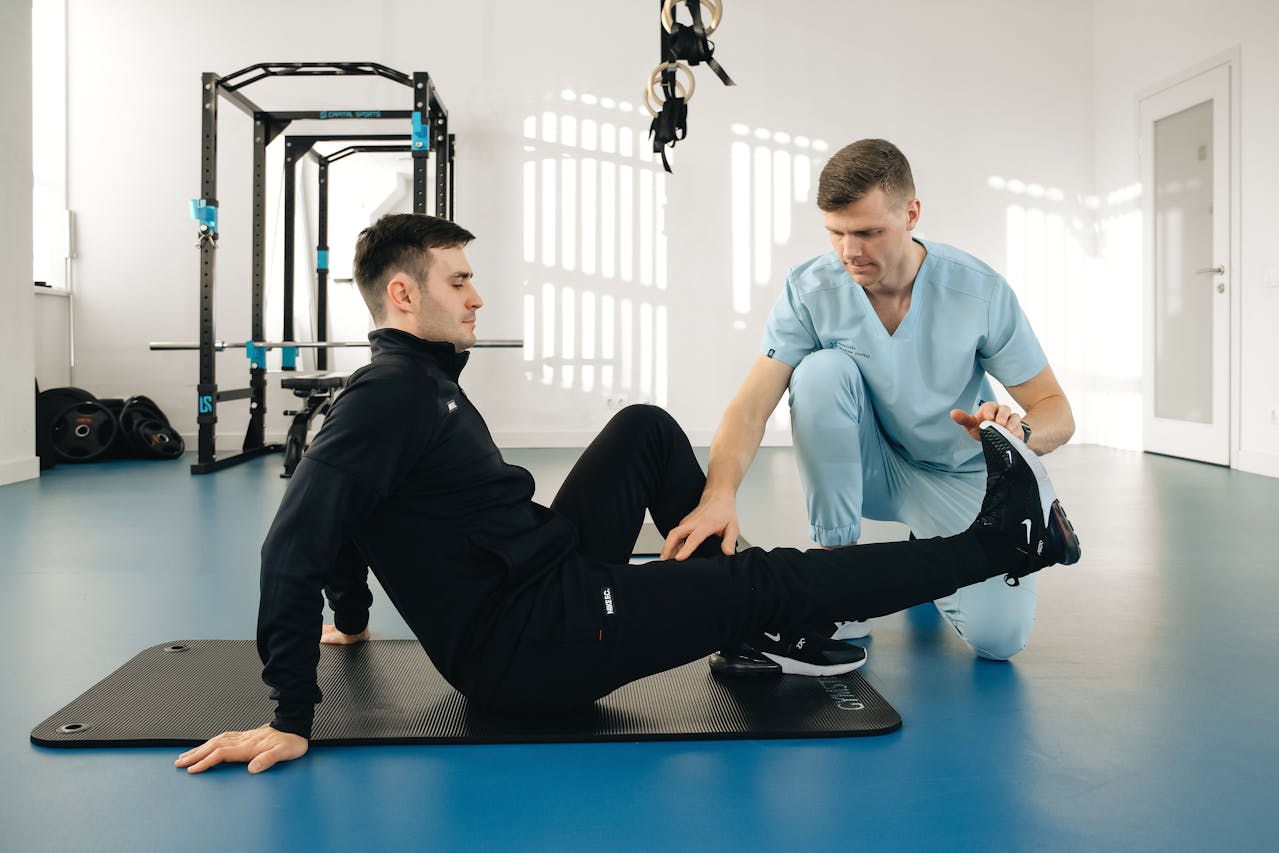
Physiotherapy is first-line care for sciatica for a reason, but only when it is specific.

The lazy version is “strengthen your core and stretch your glutes.” The effective version is: identify the mechanical drivers, manage irritability, restore capacity, then rebuild tolerance to the movements that matter in your life.

In the clinic, this often looks like three practical phases.

First, calm the system. If sitting is the trigger, we don’t pretend you can meditate your way through a two-hour desk stint. We change the sitting strategy: timed breaks, lumbar support, seat height, and work habits. We choose movements that reduce symptoms, not inflame them. That might be repeated by some people. In others, it’s gentler unload positions and controlled mobility first.

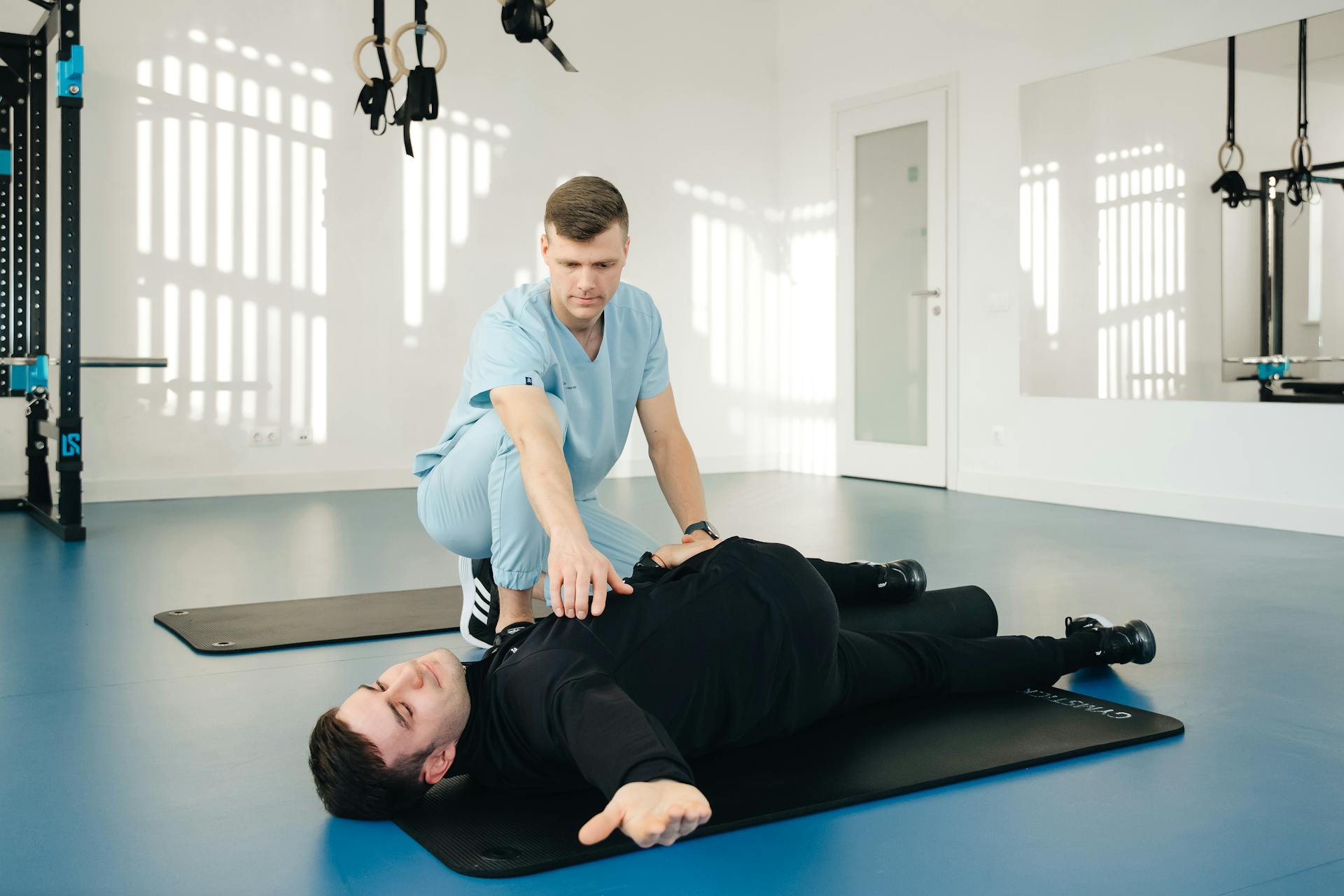
Second, restore function with targeted manual therapy and movement. Manual therapy can help when it’s used to create a window of opportunity, not as the whole plan. The goal is to help you move better, then reinforce that change with exercise.

Third, rebuild strength and tolerance. If you’re a tradie who lifts, we need a spine-and-hip strategy for lifting that doesn’t keep poking the bear. If you’re a parent carrying a child on one hip, we need to address asymmetry and endurance. If you’re training at the gym, we need to modify hinge volume, load, and range, then progress it back.

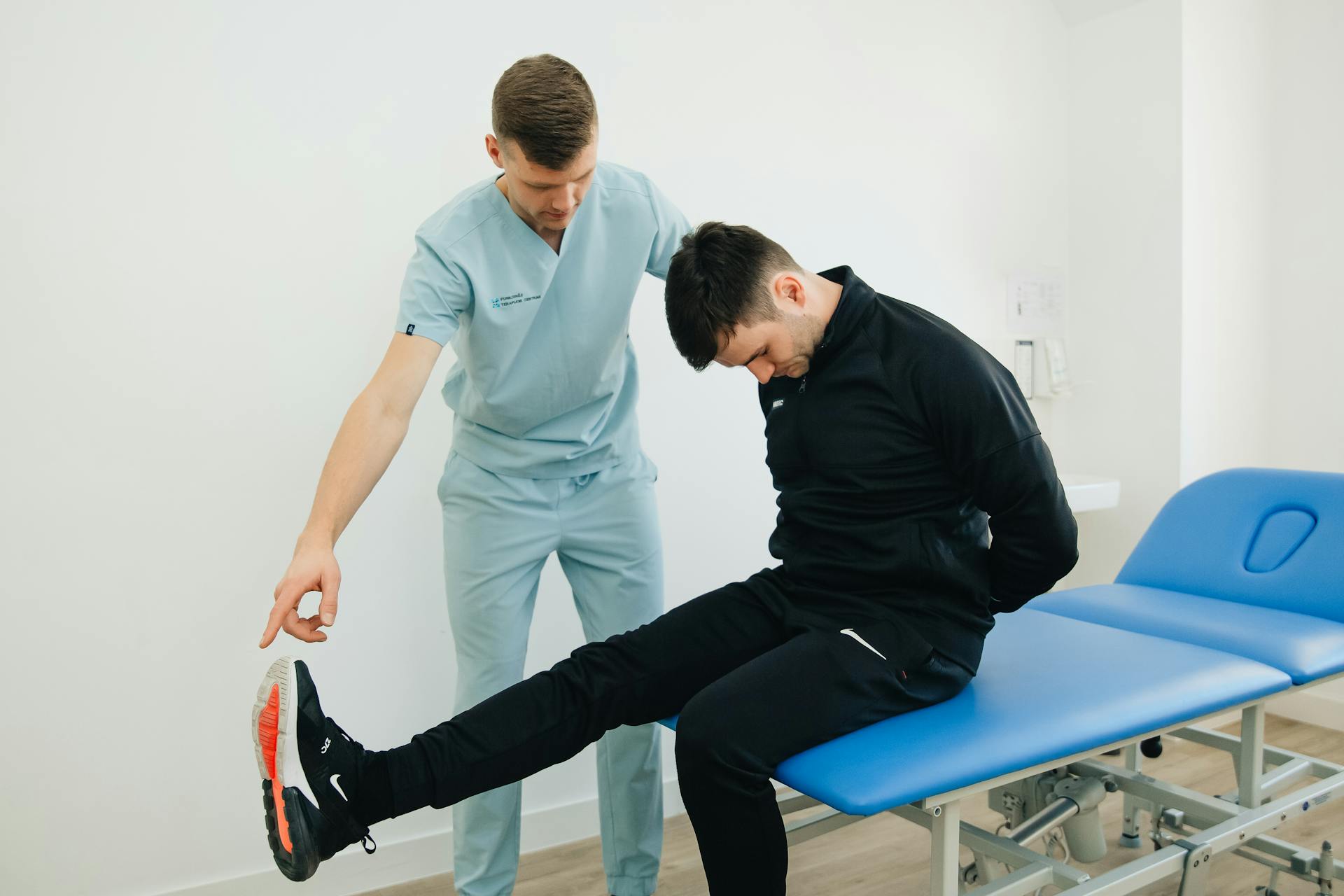
Sciatica stretches are not automatically good. We take a hard stance here: stretching is often over-prescribed and under-thought.

Example. A patient with leg pain that worsens with straight-leg raise testing, worsens after hamstring stretching, and spikes after long sitting does not need more hamstring stretch. They need a nerve irritability plan, load management, and graded strength. Stretching may come later, or it may be irrelevant.

Another example. A patient with stiffness-dominant symptoms, no distal neurological signs, and a clear improvement with mobility work might benefit from carefully chosen stretches. But “carefully chosen” is the point. Stretching is a dosage question, not a moral good.

Recovery timelines should be discussed. Some people improve meaningfully within 2–4 weeks when the driver is identified early and they follow a precise plan. Others take longer, especially if symptoms have been present for months, sleep is poor, or work demands are relentless.

Progress is not “pain-free forever by next Tuesday.” It’s being able to sit 10 minutes longer without escalation. It’s walking without the leg feeling unpredictable. It’s getting through a workday without paying for it at night.

Why Choose City South Physio for Sciatica Physiotherapy Care

Sciatica deserves proper assessment, not recycled advice.

At City South Physio, we treat sciatica by matching your symptoms to a clear clinical pattern, then building a plan you can actually follow in your real schedule. Desk workers, runners, tradies, new parents, gym lifters, shift workers. The strategy changes because life demands change.

We also explain what we’re doing and why. Patients do better when they understand the logic. That includes explaining when your pain is more likely nerve sensitivity than nerve compression, why your “tightness” isn’t necessarily a stretching problem, and what milestones tell us you’re moving in the right direction.

If you’re dealing with sciatica nerve pain, pain in the lower back, or recurring leg symptoms, book an appointment with City South Physio. We’ll assess it properly, give you a plan with specific levers to pull, and help you return to work, training, and daily life with confidence.